Why Commercial Carpet Needs a Steam Cleaning Schedule, Not a Reaction
By the time carpet looks like it needs cleaning, the fiber has already taken damage a schedule would have prevented.
September 16, 2026 · 4 min read
By the time a carpet looks dirty enough to complain about, most of the damage that's going to happen has already happened. Soil doesn't just sit on top of carpet fiber, it works down into it, and the longer it stays there, the more it grinds against the fiber every time someone walks across it. Waiting for carpet to look bad before cleaning it is waiting until after the wear is already done.
What's actually happening inside the fiber
Foot traffic pushes fine grit down past the visible surface of a carpet and into the base of the pile, where vacuuming barely reaches it. That grit sits there, dry and abrasive, and every step after that acts like light sandpaper on the fiber around it. A carpet can look reasonably clean on the surface for months while this is happening underneath, which is exactly why looking clean isn't a reliable signal for when to clean it.
This is part of why a carpet that's vacuumed daily by in-house staff can still wear out around the same time as one vacuumed less often elsewhere in the same building, if neither is on a separate deep cleaning schedule. Vacuuming manages surface debris. It was never designed to solve what's already worked its way into the base of the pile.
Why steam cleaning reaches what vacuuming can't
Steam cleaning uses heat and moisture to lift soil out from inside the fiber, not just off the top of it, then extracts it back out along with the water. That's a different job than a vacuum does, and it's why a carpet can be vacuumed every day and still need a deeper clean on its own separate schedule. The two aren't substitutes for each other, they're solving different parts of the same problem.
What a schedule catches that a complaint never will
A tenant complaint tells you about the one obvious stain someone spilled coffee on last week. It never tells you about the traffic lane by the elevator that's been quietly taking abrasive damage for six months, because nobody's spilled anything there, it just walks a little worse than the carpet around it. A cleaning schedule set by time, not by what's been reported, is the only way that traffic lane gets addressed before it needs replacing instead of cleaning.
Where stain removal and protection fit together
Spot cleaning and stain removal handle the visible, one-off problem: the coffee, the ink, the mystery stain nobody wants to claim. Carpet protection is a separate step that makes the next spill easier to lift before it sets in, which matters more in a building with regular foot traffic and regular accidents than a fresh coat of protection applied once and never revisited.
Skipping protection to save a step isn't really saving anything. It just moves the cost from a scheduled maintenance line into an emergency stain call later, usually at a worse price and on a worse timeline.
What this costs against a full replacement
A steam cleaning and protection schedule costs a fraction of replacing a stretch of commercial carpet, and it's the schedule that decides which side of that comparison a building actually lands on. Carpet cleaned on a fixed calendar and protected on its own cycle can run years longer than carpet that's only cleaned when someone finally complains, because the fiber is taking less abrasive damage the whole time, not just looking better after each visit.
How to tell if a schedule is actually being followed
The easiest way to check is to ask for dates, not descriptions. A contractor running a real schedule can tell you when the last deep clean happened and when the next one is booked, for each area of the building, without checking a calendar first. One running reactively can usually only tell you about the last time someone called with a complaint.
Tile floors follow the same logic
Buffing, waxing, and repair on tile floors work on the same principle as carpet does, on a schedule rather than a reaction. Wax wears unevenly under heavy foot traffic long before it looks obviously dull, and tile spot cleaning catches staining early enough that it doesn't need the more involved repair work that comes with waiting.
What a reasonable interval actually looks like
- High traffic areas near entrances and elevators, cleaned more often than the rest of the floor
- Conference rooms and shared spaces, on a fixed calendar rather than after visible use
- Spot cleaning and stain response handled as needed, separate from the scheduled deep clean
- Carpet protection reapplied on its own cycle, not left to wear off silently
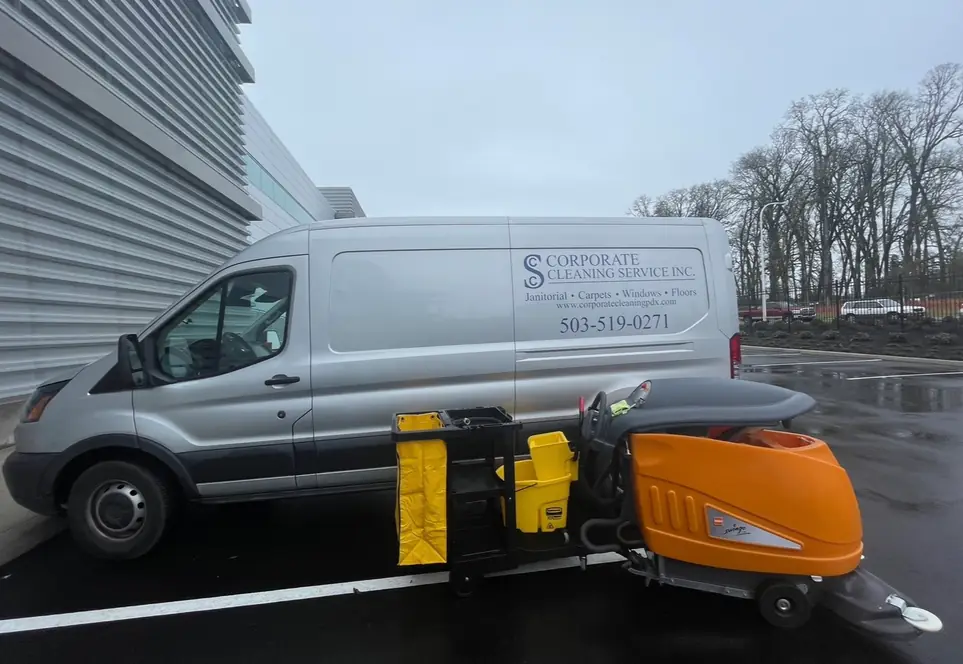
Corporate Cleaning Service Inc has offered carpet steam cleaning, stain removal, and carpet protection to Portland metro buildings since 2000, alongside tile buffing, waxing, and repair for the hard flooring in the same spaces.
Corporate Cleaning Service Inc, (503) 519-0271
Call (503) 519-0271More articles
What a Cleaning Logbook Actually Fixes in a Commercial Contract
The gap between a tenant's complaint and a crew's fix is where most cleaning contracts quietly break down, and a logbook is the cheapest way to close it.
What Portland's Wet Season Does to Carpet, Tile, and Entryways
The damage from a Pacific Northwest winter doesn't happen at the door, it happens twenty feet past it, one wet shoe at a time.