What Portland's Wet Season Does to Carpet, Tile, and Entryways
The damage from a Pacific Northwest winter doesn't happen at the door, it happens twenty feet past it, one wet shoe at a time.
September 16, 2026 · 4 min read
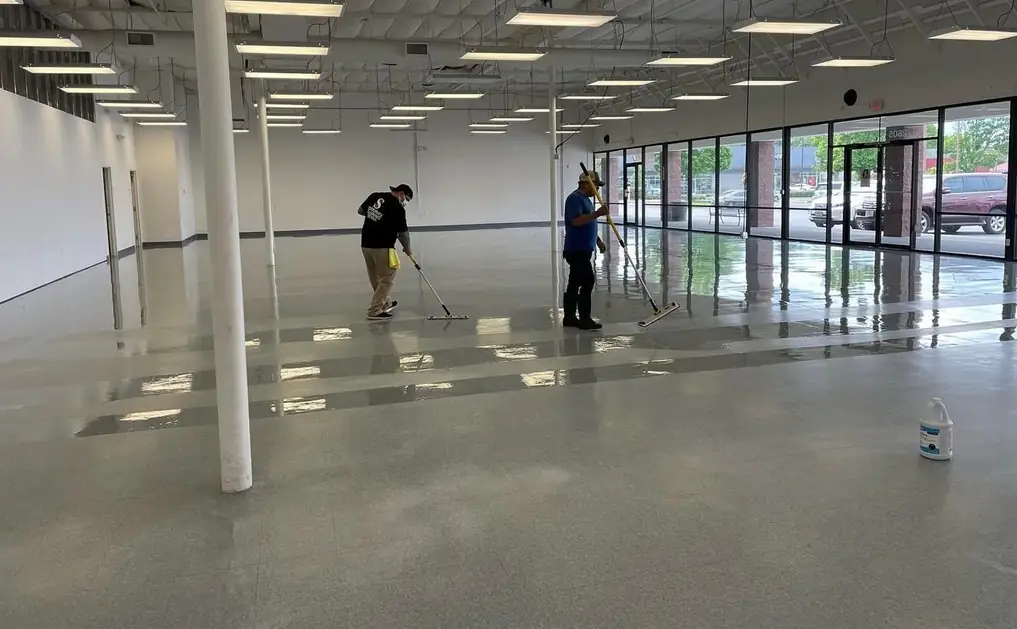
The rain doesn't stay at the door. It rides in on shoe soles, tire treads from the parking lot, and umbrellas leaned against a wall, and by the time anyone notices the carpet looks tired, the damage has already spread twenty or thirty feet past the entrance.
Why entry matting is doing more work than it looks like
A mat at the front door is supposed to catch grit and moisture before either one reaches the flooring behind it. In a wet Oregon winter, that mat is working constantly, not occasionally, and most buildings size their matting for a dry September, not a soaked January. A mat that's too short, or that isn't cleaned often enough to still absorb anything, stops doing its job about ten steps in, and the carpet or tile past that point takes the rest of the load.
The fix isn't always a bigger mat. Sometimes it's a second mat further into the lobby, or a matting schedule that gets checked and cleaned more often between November and March than it does the rest of the year.
What grit actually does to carpet fiber
Rain by itself isn't the enemy, water evaporates. What doesn't evaporate is the grit that rides in with it: sand, road salt residue, fine gravel tracked in from a parking lot. Every time someone walks across a carpet with that grit ground into their shoes, it acts like sandpaper on the fiber. Over a wet season, that's thousands of small abrasions in the same few square feet near every entrance, which is exactly why the traffic lanes in a commercial carpet wear out visibly faster than the rest of the floor.
Tile has a different problem: standing water and grout
Hard flooring doesn't abrade the way carpet does, but it holds water differently. Tracked in rain sits on a tile surface longer than on carpet, which means more time for it to work into grout lines, and more time it's a slip risk near a threshold. Grout that isn't sealed and cleaned on a regular schedule will pick up gray and black staining across a wet season faster than most building managers expect, especially right inside a door where the water pools first.
That staining is also harder to reverse the longer it sits. Grout cleaned in March after four months of tracked in winter rain takes far more work than the same grout cleaned in December, a few weeks into the season, before the discoloration has had time to set.
There's a practical safety angle here too, beyond appearance. Standing water on tile near an entrance is one of the more common slip hazards in a commercial building during the wet months, and matting plus a faster cleaning response after a storm both reduce how long that water actually sits there before someone gets to it.
Why this compounds year over year
A carpet or grout problem that isn't addressed in one wet season doesn't reset when summer comes. The wear from one winter sits underneath the surface, waiting for the next one to add to it. Carpet nearing the end of its expected life after five wet seasons might only make it through three if the maintenance schedule never adjusted for the extra months of abuse each one added. The same is true for grout: staining that's cleaned every winter stays manageable, staining that's left to compound across several seasons eventually needs replacement instead of a clean.
What a maintenance schedule should account for in the wet months
A cleaning schedule that's identical in July and January is treating two different problems like they're the same one. They're not. The entryway, the first stretch of hallway past it, and any tile near an exterior door all take more punishment for roughly five months a year in the Portland metro than they do the rest of it. Stepping up carpet and entry cleaning through that stretch, rather than waiting until spring to notice the wear, is what keeps a lobby from needing a full carpet replacement two years earlier than it should.
What to check this month
- Whether entry mats are long enough to cover the first several steps past every exterior door
- How often those mats actually get cleaned, not just vacuumed, during the wet season
- Whether grout near entrances is sealed, and when it was last checked
- Whether the cleaning schedule changes at all between summer and winter, or stays flat all year
Corporate Cleaning Service Inc has handled carpet steam cleaning, stain removal, carpet protection, and tile buffing and repair for Portland metro buildings since 2000, through every wet season in between.
Corporate Cleaning Service Inc, (503) 519-0271
Call (503) 519-0271More articles
What a Cleaning Logbook Actually Fixes in a Commercial Contract
The gap between a tenant's complaint and a crew's fix is where most cleaning contracts quietly break down, and a logbook is the cheapest way to close it.
Why Commercial Carpet Needs a Steam Cleaning Schedule, Not a Reaction
By the time carpet looks like it needs cleaning, the fiber has already taken damage a schedule would have prevented.