What Pressure Washing Actually Removes From a Storefront or Parking Lot
Not every stain on a parking lot or storefront responds to pressure washing the same way, and knowing which is which saves an argument later.
September 16, 2026 · 3 min read
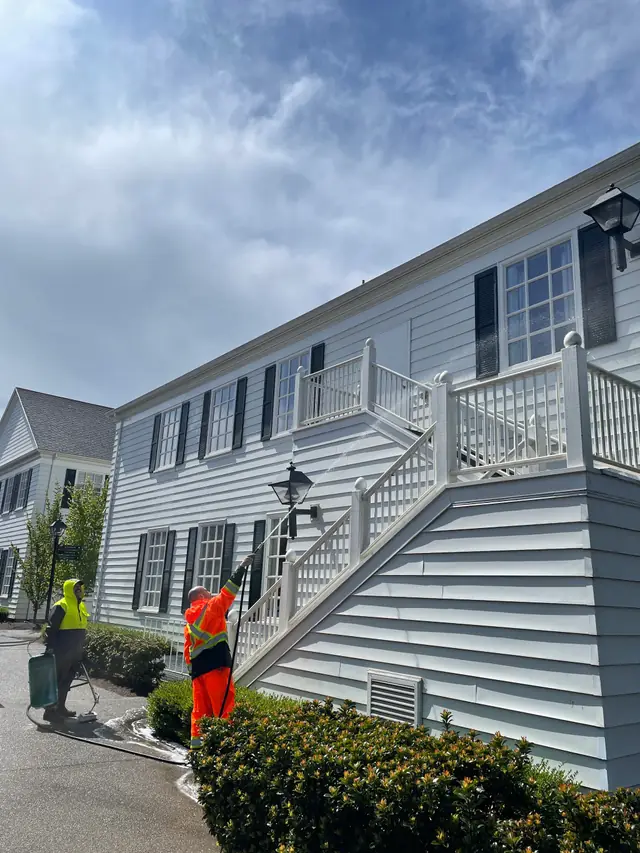
A parking lot covered in old tire marks, gum, and a faded oil stain doesn't clean the same way a storefront wall covered in mildew does, even though both jobs get called pressure washing. The equipment is similar. What actually comes off depends on what's underneath the pressure, and how long it's been there.
What typically comes off completely
Surface dirt, built up grime, mold and mildew growth, loose paint, and most rust staining respond well to pressure washing on concrete, brick, and most exterior siding. Graffiti is usually in this category too, though fresh graffiti comes off more completely than paint that's had weeks to cure and bond with a porous surface.
What's more stubborn, and why
Deep oil stains that have soaked into porous concrete for months or years don't lift the same way surface dirt does, because the oil isn't sitting on the surface anymore, it's inside it. Pressure washing will lighten a stain like that significantly and often make it far less visible, but gone completely isn't always a realistic promise on an old, deeply set stain, and a contractor who tells you otherwise before even looking at it is guessing.
The same logic applies to rust that's come from an embedded metal source, like a bolt or a drain grate, rather than surface rust sitting on top of the concrete. Pressure washing addresses the visible stain. It doesn't remove whatever's still rusting underneath and will eventually stain the same spot again.
Why timing matters more than most people think
A stain that's a week old and a stain that's a year old are not the same job, even on the same surface. Oil, rust, and organic staining like mold or algae all become harder to fully lift the longer they sit, because they have more time to bond with a porous surface like concrete or unsealed brick. A parking lot or storefront on a regular pressure washing schedule is dealing with lighter, newer buildup every time, which is part of why the result looks more complete than a once-every-few-years job on the same surface.
What pressure washing won't fix
Pressure washing cleans a surface. It doesn't repair cracked concrete, seal a porous wall against future staining, or fix whatever is causing a recurring problem, like a downspout draining onto the same section of sidewalk every time it rains. A contractor who points that out during a demonstration, rather than promising a clean that won't hold, is being straight about what the service actually does.
Why a free demonstration is worth asking for
The honest way to answer whether a stain will actually come off before signing anything is to clean a section of it and look at the result together, rather than quoting a price off a description or a photo. A demonstration on an actual corner of the parking lot or a section of the wall shows exactly what the surface looks like after cleaning, on that specific stain, with that specific equipment, before either side commits to a number.
Sidewalks, drive thru lanes, and the surfaces people don't think about
Storefronts and parking lots get the attention because they're visible from the street. Sidewalks, drive thru lanes, and the areas right around dumpsters or loading docks build up grease, gum, and grime just as fast, and they're often the first thing a customer's shoe touches walking in the door. A pressure washing schedule that only covers the parts of the property visible from a passing car is missing the parts a customer actually walks across.
How often a commercial property typically needs it
There's no single answer that fits every property, because traffic, weather exposure, and surface type all change how fast grime builds back up. A parking garage with heavy daily traffic needs attention more often than a low traffic sidewalk on the side of a building. The honest way to set an interval is to look at how a specific property actually gets used, rather than applying the same calendar to every building on a route.
What a commercial job typically covers
- Exterior walls, siding, and entryways, including mold, mildew, and grime buildup
- Parking lots and parking garages, including oil staining and tire marks
- Sidewalks, drive thru lanes, and areas around dumpsters or loading docks
- Graffiti removal, most effective the sooner it's addressed after it appears
Corporate Cleaning Service Inc offers a free demonstration before quoting a pressure washing job anywhere in the Portland metro, so a building owner sees the actual result before agreeing to a price.
Corporate Cleaning Service Inc, (503) 519-0271
Call (503) 519-0271More articles
What a Cleaning Logbook Actually Fixes in a Commercial Contract
The gap between a tenant's complaint and a crew's fix is where most cleaning contracts quietly break down, and a logbook is the cheapest way to close it.
What Portland's Wet Season Does to Carpet, Tile, and Entryways
The damage from a Pacific Northwest winter doesn't happen at the door, it happens twenty feet past it, one wet shoe at a time.